
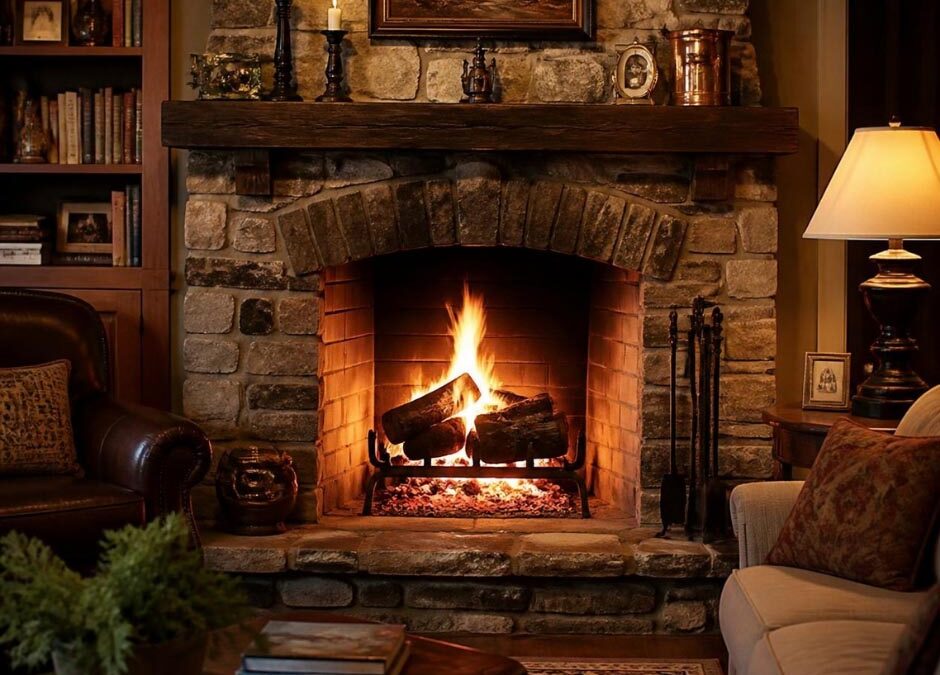
As autumn temperatures drop, heating equipment becomes a leading cause of home fires. Burning logs in a fireplace, using a portable space heater, or lighting up a wood stove for the first time in months brings warmth—and distinct home insurance risks.
Understanding how to manage these seasonal heating risks helps protect your family, your property, and your coverage.
Before lighting the first fire of the season, inspect and prepare your fireplace and chimney system.
Key Inspection & Maintenance Steps
-
- Schedule Annual Chimney Sweeping: Over time, burning wood deposits creosote—a dark, highly flammable tar-like residue—along the inside of your chimney liner. A certified chimney sweep can remove build-up and inspect for structural cracks or blockages (like bird nests).
- Check the Chimney Cap and Flue: Verify that your flue opens and closes smoothly. A sturdy chimney cap with wire mesh keeps sparks from escaping onto your roof while preventing rain, debris, and pests from entering.
- Burn Only Seasoned Hardwood: Avoid burning green (unseasoned) wood, cardboard boxes, trash, or artificial trees. Seasoned hardwoods like oak or maple burn cleaner and generate significantly less creosote than softwood or damp timber.
- Use a Protective Mesh Screen: Always place a heavy glass or metal mesh screen in front of your fireplace opening to contain flying embers and popping sparks.
Space Heater Guidelines: Safe Supplemental Heating
Electric space heaters offer convenient room-by-room heating, but improper placement or power connections can quickly turn them into a fire hazards.
Essential Space Heater Rules
-
- Follow the 3-Foot Clearance Rule: Keep space heaters at least three feet away from all combustible materials, including curtains, bedding, rugs, upholstered furniture, and paper products.
- Plug Directly into Wall Outlets: Never plug a space heater into an extension cord or power strip. The high-power draw can overheat power strips and cause electrical fires inside the wall.
- Choose Modern Safety Features: Use space heaters that feature automatic tip-over shutoff switches and built-in overheat protection.
- Never Leave Running Unattended: Turn off and unplug portable space heaters when leaving the room or going to sleep.
Smoke and Carbon Monoxide Detectors:
Early Warning Systems
Heating equipment issues frequently involve invisible dangers like carbon monoxide (CO) alongside fire risks.
-
- Test Monthly: Press the test button on all smoke and CO alarms every month.
- Replace Batteries Annually: Swap out unit batteries at least once per year (or immediately if you hear a low-battery chirp).
- Check Expiration Dates: Replace smoke detectors every 10 years and carbon monoxide detectors every 5 to 7 years, depending on manufacturer specifications.
- Install on Every Level: Place alarms on every floor of your home, inside every bedroom, and directly outside sleeping areas.
How Autumn Fires Impact Your Homeowners Insurance Coverage
A severe home fire can cause extensive damage to structure and personal belongings. Reviewing your policy details before heating season arrives helps confirm that your coverage limits match current reconstruction costs.
What Homeowners Should Verify
-
- Dwelling Coverage Limits: Confirm your policy covers full replacement costs rather than actual cash value.
- Personal Property Limits: Take an inventory of high-value items, electronics, and home furnishings.
- Heating Equipment Notices: Some insurers require notification if you install a wood-burning stove or pellet stove as a primary or secondary heat source.
- Deductible Details: Understand your policy’s standard property loss deductible before an incident occurs.
Standard Autumn Home Safety Checklist
-
- [ ] Chimney inspected and cleaned by a professional
- [ ] Flue damper opens, closes, and seals properly
- [ ] Fireplace screen clean and free of damage
- [ ] Space heaters inspected for frayed cords or damaged plugs
- [ ] Space heaters placed 3+ feet from furniture and curtains
- [ ] Smoke and CO detectors tested on every level
- [ ] Fire extinguisher present and fully charged near the kitchen and fireplace
FAQ: Heating & Fire Safety Questions
How often should a chimney be cleaned?
Chimneys should be inspected annually by a qualified professional and cleaned whenever creosote build-up exceeds 1/8 of an inch.
Does homeowners insurance cover fire damage caused by space heaters?
Standard homeowners insurance policies generally cover accidental fire damage caused by heating devices, subject to your policy terms, conditions, and deductible.
What should I do if my chimney catches fire?
Evacuate everyone from the home immediately, call 911, and do not attempt to extinguish a full chimney fire yourself.
Protect Your Home This Season
Reviewing your homeowners insurance policy before winter helps confirm your property is covered for unexpected seasonal risks. Contact our agency to review your current policy details or discuss potential coverage updates.